



When buying possum merino knitwear, check the blend ratio, knit density, and finishing quality. The best New Zealand possum merino typically contains 30–50% possum fur, 40–60% merino wool, and 10% silk for strength. Higher possum content generally means more warmth and softness, but construction matters just as much as the blend. Not all possum merino is created equal — price doesn't always reflect what you're getting. Whether you're browsing Koru, McDonald, Trilogy, Woolline, Untouched World, Noble Wilde, or Kapeka, here's how to tell what's worth your money and what isn't.

Blend Ratios: What the Numbers Mean
Every possum merino label shows a fibre ratio. These aren't arbitrary. They determine warmth, weight, durability, and price. Here are the most common blends you'll find across New Zealand manufacturers.
35–40% possum fur, 50–55% merino wool, 10% mulberry silk. This is the premium tier. At this ratio, you're getting serious warmth from the hollow possum fibre without sacrificing durability from the merino. The silk adds lustre, drape, and a refined finish. Both Koru and McDonald sit in this range — Koru at 40% possum with merino lambswool, McDonald at 35% possum with merino wool. The difference in wear is subtle; both deliver genuine warmth at minimal weight. What varies more is the knit style, construction weight, and design philosophy. Koru leans into textured knits and bold colourways, while McDonald favours structured tailoring with details like lambskin leather trim. You're choosing between brands at this level, not between blends.
25% possum fur, 65% merino wool, 10% silk. Built for durability at a more accessible price point. Lower possum content means slightly less insulation, but the higher merino percentage creates a robust, hard-wearing fabric. Trilogy and Woolline both use this ratio. Brushtail by Koru goes lighter again, at 20% possum fur, 75% merino wool and 5% silk, for its two-tone plated knits.
You'll also find blends at 20/70/10 and 40/53/7, where the possum content drops but the merino quality increases — sometimes using superfine 17-micron wool that's produced by only around 2% of New Zealand's merino sheep. Lower possum doesn't automatically mean lower quality. When the merino grade is exceptional, the overall garment can be softer and lighter than a higher-possum blend using standard wool.
And if someone's selling "pure possum," be sceptical. Possum fibre is too short and smooth to spin into stable yarn on its own. It needs merino's natural crimp to hold the blend together.

Construction: What Separates Good from Average
Two garments with identical blend ratios can feel completely different depending on how they're made.
Gauge and knit density. Quality possum merino has tight, even knitting. Loose knits pill faster, lose shape, and trap less warmth. When shopping online, look for product listings that include clear photography and detailed descriptions. Brands that invest in presenting their products well are generally more confident in what they're selling.
Seam construction. Quality pieces have flat, secure stitching that sits comfortably against skin. Shoulder and side seams should lie flat when the garment hangs naturally. This is one area where New Zealand-made garments consistently outperform cheaper imports.
Finishing details. Cuffs, hems, and necklines on well-made possum merino hold their shape through years of wear. Poor finishing shows up fast: stretched necklines, curling hems, loose threads at seams. These details are hard to assess from a product listing, which is why buying from established New Zealand manufacturers with decades of production experience matters.
Price: What You Should Expect to Pay
Possum merino costs more than standard wool because possum fibre comes from pest control operations across remote New Zealand bush, not farming. Sourcing and processing adds real cost, and quality manufacturing in New Zealand adds more.
Based on current New Zealand retail pricing across established brands:
- Scarves: $49 to $149
- Gloves: $35 to $110
- Beanies and headwear: $50 to $180
- Socks: $49 to $69
- Jumpers and cardigans: $219 to $499
- Jackets and coats: $189 to $639
- Throws and blankets: $189 to $725
These ranges reflect the genuine cost of quality fibre, mulberry silk, and New Zealand manufacturing. If you're seeing possum merino priced well below what established New Zealand brands charge for a similar item, something has been compromised — fibre grade, construction, or materials. The blend ratio on the label might look right, but that doesn't mean the fibre quality or manufacturing standards match what you'd get from a brand with decades of production experience behind it.
At the higher end, price differences between brands usually reflect fibre exclusivity. Superfine 17-micron merino commands a genuine premium, as do rare fibres like cervelt. Higher prices aren't automatically a red flag, but the blend ratio and fibre grade should always justify what you're paying.
Fibre Quality: What You Can't See on the Label
Possum fibre length. Longer fibres create smoother, stronger yarn with less pilling. You can't assess this from a product listing, which is why manufacturer reputation matters. Brands like Koru, McDonald, and Untouched World have been producing possum merino for decades. That track record means something.
Merino grade. Not all merino is equal. Superfine merino (15 to 17 microns) delivers exceptional softness and can command prices that rival or exceed possum merino blends. Standard merino sits around 19 to 22 microns: still soft, but noticeably different against skin. Coarser merino (22+ microns) feels scratchier. If a product doesn't specify fibre grade, assume they're not using the good stuff.
The conservation connection. All possum fibre in New Zealand comes from pest control operations. Every garment contributes to protecting native ngahere and manu like kererū and tūī. But not all brands communicate this clearly. If kaitiakitanga matters to you, look for brands that connect their products directly to conservation outcomes. You can read more about how possum merino supports native ecosystems on our conservation page.
Red Flags: When to Walk Away
"100% possum" claims. Not possible. Pure possum fibre can't be spun into durable fabric.
Vague origin claims. "Made with New Zealand possum" could mean anything. The fibre might be from New Zealand, but the garment could be manufactured offshore. Look for "Made in New Zealand" for genuine local production.
"Designed in New Zealand" isn't "Made in New Zealand." Some brands trade on New Zealand heritage while manufacturing offshore. The label might say the garment was designed here, but if it was constructed in a factory overseas, the quality standards, working conditions, and craftsmanship are completely different. This has become increasingly common — brands that once manufactured everything in New Zealand have quietly moved production overseas to cut costs, and the difference shows in the finished product. Take it a step further and you'll find international marketplaces selling "New Zealand possum merino" at prices that wouldn't even cover the raw fibre. If a possum merino scarf costs less than a café lunch, it's not the real thing. Genuine possum merino is made from a pest control by-product sourced from remote New Zealand bush — there's no shortcut that makes it cheap.
Prices that don't add up. Quality possum merino costs real money to produce. When the price looks too good to be true for the claimed blend ratio and origin, it usually is. Compare what you're looking at against what established New Zealand brands charge for a similar item. If there's a dramatic gap, ask why. Fibre quality, construction standards, and material choices all affect cost — and the cheapest option is almost never the best value long-term.
Missing or vague blend information. A reputable brand has nothing to hide. If a product listing doesn't specify the exact blend ratio and fibre types, there's usually a reason. If you have to dig for basic fibre information, that's a red flag.

Five Questions Worth Asking Before You Buy Online
- What's the exact blend ratio, including all fibre types?
- Where was the garment manufactured?
- Does the brand provide clear care instructions?
- What's the return policy if the quality doesn't match expectations?
- Does the brand provide detailed product information and clear photography?
If a brand can't or won't answer these clearly on their website, keep looking.
What Quality Actually Looks Like
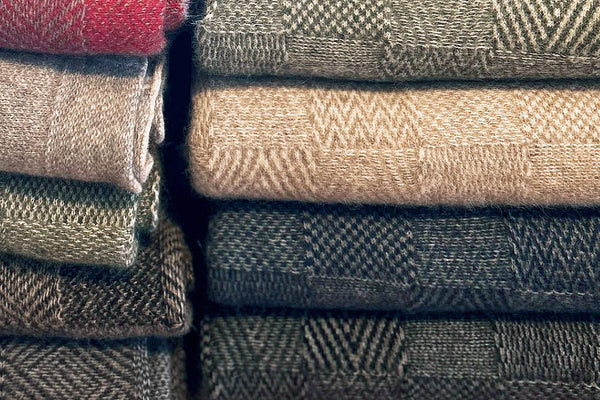
Quality possum merino is substantial but light. Colours are rich and even. Construction is tight and uniform. Seams lie flat. The garment holds its shape. And the brand is completely transparent about blend, origin, and care.
When you find the real thing, you're getting exceptional warmth at minimal weight, softness that rivals any luxury fibre, and genuine support for protecting Aotearoa's native taonga. That's luxury grounded in kaitiakitanga, not just a price tag.
See our garment care guide for keeping your pieces in top condition, or browse our McDonald, Koru, Trilogy, and Woolline collections — all New Zealand-made with transparent blend ratios and genuine conservation impact.
Common questions
How can you tell if possum merino is good quality?
Quality possum merino can be assessed by checking the blend ratio, knit density, and construction details. The label should state the exact percentage of each fibre — possum fur, merino wool, and silk. Tight, even knitting, flat seams, and well-finished cuffs and necklines indicate solid construction. Brands that publish clear blend ratios and detailed product photography are generally more transparent about what they're selling.
What is a typical possum merino blend ratio?
A typical possum merino blend ranges from around 25–40% possum fur, with the remainder usually merino wool and approximately 10% mulberry silk. Higher possum content generally increases warmth and softness, while higher merino content typically increases structure and durability. Blend ratios vary by brand and intended use — there is no single standard across the industry.
Does higher possum content mean better quality possum merino?
Not necessarily. Higher possum content generally means more warmth and softness, but merino grade matters equally. A blend using superfine 17-micron merino wool — produced by only around 2% of New Zealand's merino sheep — can be softer and lighter than a higher-possum blend using standard wool. When assessing quality, both the possum percentage and the merino grade should be considered together.
How much does possum merino knitwear cost in New Zealand?
Across established New Zealand brands, possum merino accessories range from NZ$35 for gloves to NZ$180 for beanies, and NZ$49–$149 for scarves. Jumpers and cardigans range from NZ$219 to NZ$499. Jackets and coats reach NZ$189–$639, and throws and blankets range from NZ$189 to NZ$725. Prices significantly below these ranges for equivalent items suggest compromises in fibre grade, construction, or materials.
Why is possum merino more expensive than standard wool knitwear?
Possum merino is priced higher than standard wool due to the sourcing of possum fibre from conservation pest control operations in New Zealand and the cost of local manufacturing. The fibre is not farmed — it comes from wild possums removed across remote New Zealand bush — and processing it into yarn contributes to higher production costs. Quality manufacturing in New Zealand, using skilled labour and established production standards, adds further.
Can possum merino be 100% possum fibre?
No. Pure possum fibre cannot be spun into durable fabric on its own. The fibre is too short and smooth to hold together without the natural crimp of merino wool. Any product claiming to be '100% possum' is either inaccurate or using the term loosely. Genuine possum merino requires a merino wool component to create a stable, spinnable yarn — typically making up 50–65% of the blend.
Is possum merino made in New Zealand or overseas?
Genuine New Zealand-made possum merino is manufactured domestically, but not all products sold as possum merino are made in New Zealand. Some brands use New Zealand possum fibre but construct the garment offshore. 'Designed in New Zealand' does not mean manufactured there. Look specifically for 'Made in New Zealand' on the label or product listing. Koru, Trilogy, McDonald, and Royal Merino are all manufactured in New Zealand.
How do possum merino blend ratios compare between Koru, McDonald, and Trilogy?
Koru uses a 40% possum fur, 50% merino lambswool, 10% mulberry silk blend across most of its mainline range. McDonald uses a 35% possum, 55% merino wool, 10% silk blend. Trilogy, made at the same Warkworth workroom as Koru, uses a 25% possum, 65% merino, 10% silk ratio. Higher possum content in Koru's blend generally increases warmth and softness, while Trilogy's higher merino content typically results in a lighter, more structured fabric with improved durability.
What are the red flags when buying possum merino online?
Key red flags include claims of '100% possum' (not possible), 'designed in New Zealand' without 'made in New Zealand', missing or vague blend ratio information, blends that add nylon beyond what a piece like a sock needs for stretch, and prices significantly below what established New Zealand brands charge for equivalent items. If a product doesn't specify exact fibre percentages, or uses phrases like 'made with New Zealand possum' without clarifying where the garment was manufactured, treat it with caution.
What is the role of silk in possum merino knitwear?
Most premium possum merino blends include around 10% mulberry silk, which adds softness, natural lustre, and improved drape to the finished fabric. Silk also helps strengthen the yarn structure. If silk content is not specified, or varies significantly from around 10%, it may indicate a different fabric composition and is worth reviewing alongside the full blend details before purchasing.
What should a good possum merino label include?
A transparent possum merino label should include the exact fibre composition with percentages (possum fur, merino wool, and silk), the country of manufacture, and care instructions. Reputable New Zealand brands provide this information clearly on the label and in product listings. If a label lists only generic terms like 'natural fibres' or omits the manufacturing country, it is worth investigating further before purchasing.
Keep reading

How Possum Merino is Made: From Trap to Garment
Most people who own possum merino have never seen how it's made, from the bush to the mill.
How Our Brands Size: Koru, Brushtail, Trilogy, McDonald, Royal Merino & Woolline
Koru, Brushtail, Trilogy, McDonald, Royal Merino and Woolline each size differently. Here's how they compare to the l...

Possum Merino and Cashmere: How Two Luxury Fibres Compare
Cashmere has earned its reputation. Here's why possum merino might earn a place alongside it.

